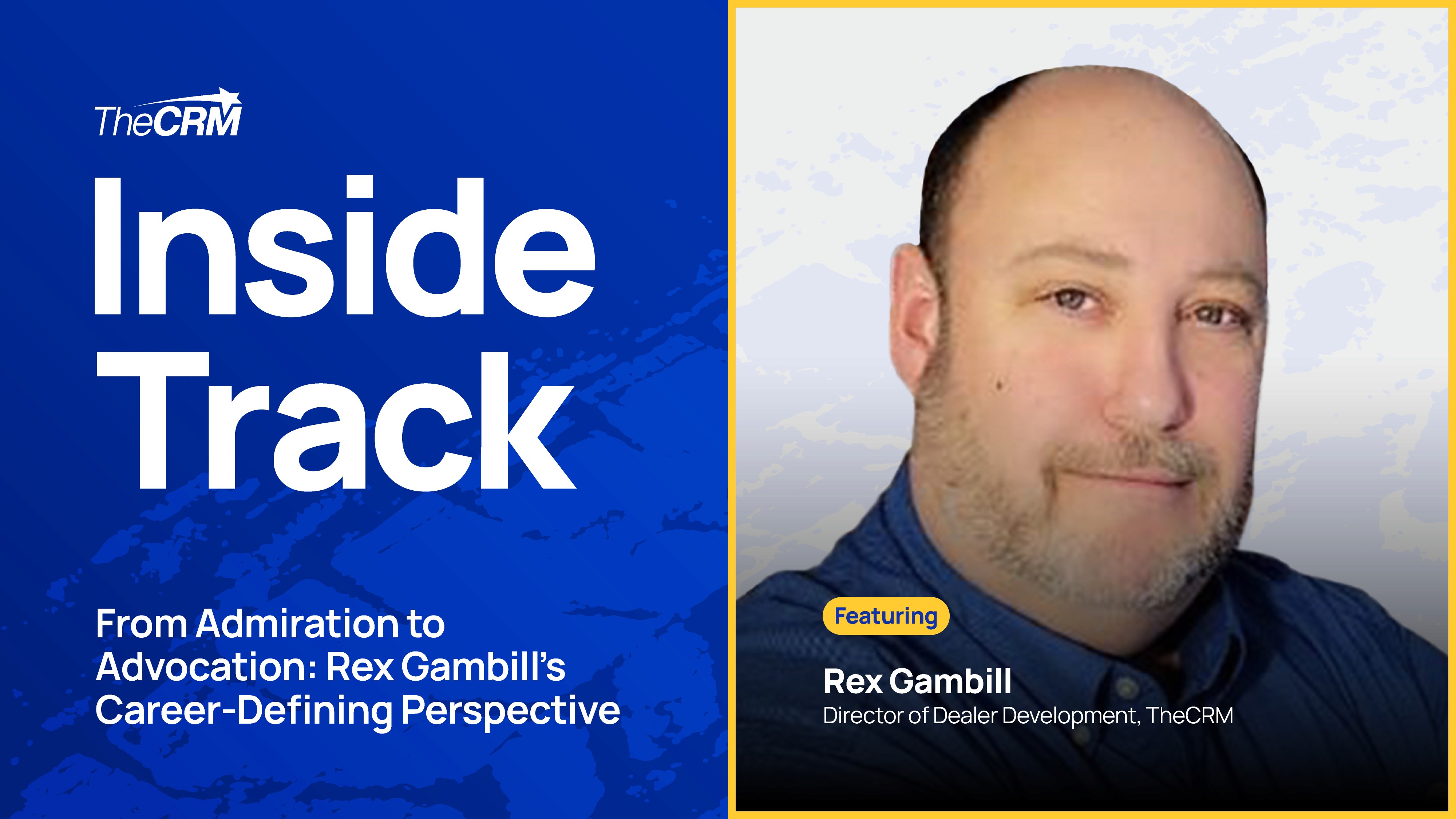
Inside Track:
From admiration to advocation: Rex Gambill's career-defining perspective
By TheCRM
February 10, 2026
————————————————————
Rex, let’s start at the beginning. How did you originally get into the RV industry?
Rex:
I was never in automotive. I spent 19 years at a family-owned RV dealership here in Georgia. About three years into my time there, this was the mid to late 2000s, the dealer came back from a 20 Group meeting and said, “We need a CRM.”
At that time, there really wasn’t a viable CRM built specifically for the RV industry. So I started casting a wider net and looking at automotive providers, since I knew they had more mature systems.
And that’s how you discovered TheCRM?
Rex:
Yes. I don’t remember exactly how I landed on the company, but I remember why we chose them. They were willing to work with us as an RV dealer.
They understood that we weren’t their typical automotive client, but they were open to listening, adapting, and building alongside us. That openness made all the difference.
Over time, that relationship deepened. Starting in 2012, I served on TheCRM’s Dealer Advisory Council. We’d meet periodically to give feedback on what worked, what didn’t, what dealers needed next and to preview new developments that were always coming down
the pipeline.
It gave me exposure not just to where the product was going, but also to how other dealers, especially in automotive were
using CRM in ways that RV dealers could learn from.
Fast forward a bit. What changed that made you decide to join TheCRM after leaving
the dealership?
Rex:
The early 2020s were a pivotal moment. Up until then, the product had primarily served automotive, but two big shifts were happening.
First, the platform started leaning into AI before most people were even talking about it seriously. Second, the CEO was clearly making a deliberate move to pursue the RV vertical in earnest, not as an afterthought.
When my dealership was sold, it felt like the right time. I had lived on the dealer side. I had chosen the product. I had used it for years. Making the move to TheCRM felt like a natural continuation of that journey.
Was that transition, from dealer to vendor, pretty seamless?
Rex:
It helped that I had both perspectives. I knew what it was like to use the software every day, and I knew what dealers struggled with.
That meant I could speak their language. I understood the common issues RV dealers face because I’d lived them. I’d participated in 20 Groups, belonged to large dealer networks, and interacted with dealers outside my own store for years.
I may not have had the biggest personal network, but I had credibility. And that matters when you’re talking to dealers about changing the way they operate.
When you were evaluating CRMs as a dealer, what were other providers missing?
Rex:
Most of them didn’t understand the RV industry, and many didn’t want to.
To them, RV sounded like extra work. Custom development. Complexity. So
the conversations usually stopped
pretty quickly.
Every couple of years, the dealership owner would ask me to do my due diligence and see if there was something better out there. And I did. I sat through demos with RV-specific CRMs that eventually entered
the market.
But we were always two or three years ahead of them with TheCRM. Even if something was cheaper, I couldn’t justify going backwards.
We relied on the system too much.
In fact, after the dealership was sold, the remaining team actually campaigned to keep TheCRM, and they’re still using it today.
That says a lot. Do RV dealers tend to share what’s working?
Rex:
Very much so. The RV industry is small compared to automotive. There isn’t an RV dealership in every town. Only about 8% of Americans own or use an RV.
Historically, it’s been dominated by family-owned businesses, many second-generation. There’s been consolidation in recent years, but it’s still a tight-knit community. Dealers know each other. They participate in 20 Groups. They talk.
We’ve had many dealers come to us because someone they trust said, “You should check these guys out.”
How are RV dealers reacting to AI right now?
Rex:
There’s excitement and there’s caution.
For a long time, people said the RV industry was 15–20 years behind automotive. That’s no longer true. RV dealers today are just as modern and just as capable.
A lot of hesitation comes from misunderstanding what AI actually is. Many people think it’s just one thing, like writing emails or texts, but that’s a very small part
of it.
The real value is in revenue generation, consistency, and preventing opportunities from falling through the cracks.
What developments are you most excited about?
Rex:
We’re still discovering what’s possible. AI is like a book with many pages left to be read.
Think about AI handling real conversations over the phone. Acting as a receptionist. Answering questions about RV specs
after hours.
Being fully integrated across phone, CRM, and website so every customer interaction lives in one unified system.
That’s what excites me, when AI has full visibility into all communication, both content and context. That’s where the
magic happens.
RV buying is very emotional. How does that differ from automotive?
Rex:
An RV is never a need. It’s always a want.
Sometimes it’s a retirement gift. Sometimes it’s the key to making memories with family. Camping, tailgating, national parks, getting away from screens.
I was a Boy Scout growing up. I don’t remember everything from third grade, but I remember every campout. That’s what
RVs unlock.
For retirees, it’s freedom. For families, it’s connection. That emotional core is what drives RV purchases.
Any final thoughts for
dealers considering a platform
like TheCRM?
Rex:
I’d caution against waiting.
Yes, there are seasonal cycles, especially in colder regions, but technology like this can be the difference between selling 30 units and selling 40 in a month.
We’re not here to sell RVs for dealers. But we are here to help them sell more by bringing consistency, visibility, and intelligence to how they care for customers.
If a dealer waits until “later,” their competition may already be ahead.
Stay Up-to-Date
with Inside Track
Inside Track: From admiration to advocation: Rex Gambill's career-defining perspective
By TheCRM
February 10, 2026
———————————————————————————————————————————————————————————————
Rex, let’s start at the beginning. How did you originally get into the RV industry?
Rex:
I was never in automotive. I spent 19 years at a family-owned RV dealership here in Georgia. About three years into my time there, this was the mid to late 2000s, the dealer came back from a 20 Group meeting and said, “We need a CRM.”
At that time, there really wasn’t a viable CRM built specifically for the RV industry. So I started casting a wider net and looking at automotive providers, since I knew they had more mature systems.
And that’s how you discovered TheCRM?
Rex:
Yes. I don’t remember exactly how I landed on the company, but I remember why we chose them. They were willing to work with us as
an RV dealer.
They understood that we weren’t their typical automotive client, but they were open to listening, adapting, and building alongside us. That openness made all the difference.
Over time, that relationship deepened. Starting in 2012, I served on TheCRM’s Dealer Advisory Council. We’d meet periodically to give feedback on what worked, what didn’t, what dealers needed next and to preview new developments that were always coming down
the pipeline.
It gave me exposure not just to where the product was going, but also to how other dealers, especially in automotive were using CRM in ways that RV dealers could learn from.
Fast forward a bit. What changed that made you decide to join TheCRM after leaving
the dealership?
Rex:
The early 2020s were a pivotal moment. Up until then, the product had primarily served automotive, but two big shifts were happening.
First, the platform started leaning into AI before most people were even talking about it seriously. Second, the CEO was clearly making a deliberate move to pursue the RV vertical in earnest, not as an afterthought.
When my dealership was sold, it felt like the right time. I had lived on the dealer side. I had chosen the product. I had used it for years. Making the move to TheCRM felt like a natural continuation of that journey.
Was that transition, from dealer to vendor, pretty seamless?
Rex:
It helped that I had both perspectives. I knew what it was like to use the software every day, and I knew what dealers struggled with.
That meant I could speak their language. I understood the common issues RV dealers face because I’d lived them. I’d participated in 20 Groups, belonged to large dealer networks, and interacted with dealers outside my own store for years.
I may not have had the biggest personal network, but I had credibility. And that matters when you’re talking to dealers about changing the way they operate.
When you were evaluating CRMs as a dealer, what were other providers missing?
Rex:
Most of them didn’t understand the RV industry, and many didn’t want to.
To them, RV sounded like extra work. Custom development. Complexity. So the conversations usually stopped pretty quickly.
Every couple of years, the dealership owner would ask me to do my due diligence and see if there was something better out there. And I did. I sat through demos with RV-specific CRMs that eventually entered the market.
But we were always two or three years ahead of them with TheCRM. Even if something was cheaper, I couldn’t justify going backwards.
We relied on the system too much.
In fact, after the dealership was sold, the remaining team actually campaigned to keep TheCRM, and they’re still using it today.
That says a lot. Do RV dealers tend to share what’s working?
Rex:
Very much so. The RV industry is small compared to automotive. There isn’t an RV dealership in every town. Only about 8% of Americans own or use an RV.
Historically, it’s been dominated by family-owned businesses, many second-generation. There’s been consolidation in recent years, but it’s still a tight-knit community. Dealers know each other. They participate in 20 Groups. They talk.
We’ve had many dealers come to us because someone they trust said, “You should check these guys out.”
How are RV dealers reacting to AI right now?
Rex:
There’s excitement and there’s caution.
For a long time, people said the RV industry was 15–20 years behind automotive. That’s no longer true. RV dealers today are just as modern and just as capable.
A lot of hesitation comes from misunderstanding what AI actually is. Many people think it’s just one thing, like writing emails or texts, but that’s a very small part of it.
The real value is in revenue generation, consistency, and preventing opportunities from falling through the cracks.
What developments are you most excited about?
Rex:
We’re still discovering what’s possible. AI is like a book with many pages left to be read.
Think about AI handling real conversations over the phone. Acting as a receptionist. Answering questions about RV specs after hours.
Being fully integrated across phone, CRM, and website so every customer interaction lives in one unified system.
That’s what excites me, when AI has full visibility into all communication, both content and context. That’s where the magic happens.
RV buying is very emotional. How does that differ from automotive?
Rex:
An RV is never a need. It’s always a want.
Sometimes it’s a retirement gift. Sometimes it’s the key to making memories with family. Camping, tailgating, national parks, getting away from screens.
I was a Boy Scout growing up. I don’t remember everything from third grade, but I remember every campout. That’s what RVs unlock.
For retirees, it’s freedom. For families, it’s connection. That emotional core is what drives RV purchases.
Any final thoughts for dealers considering a platform like TheCRM?
Rex:
I’d caution against waiting.
Yes, there are seasonal cycles, especially in colder regions, but technology like this can be the difference between selling 30 units and selling 40 in a month.
We’re not here to sell RVs for dealers. But we are here to help them sell more by bringing consistency, visibility, and intelligence to how they care for customers.
If a dealer waits until “later,” their competition may already be ahead.
Inside Track: From admiration to advocation: Rex Gambill's career-defining perspective
By TheCRM
February 10, 2026
———————————————————————————————————————————
Rex, let’s start at the beginning. How did you originally get into the
RV industry?
Rex:
I was never in automotive. I spent 19 years at a family-owned RV dealership here in Georgia. About three years into my time there, this was the mid to late 2000s, the dealer came back from a 20 Group meeting and said, “We need a CRM.”
At that time, there really wasn’t a viable CRM built specifically for the RV industry. So I
started casting a wider net and looking at automotive providers, since I knew they had more mature systems.
And that’s how you discovered TheCRM?
Rex:
Yes. I don’t remember exactly how I landed on the company, but I remember why we chose them. They were willing to work with us as an RV dealer.
They understood that we weren’t their typical automotive client, but they were open to listening, adapting, and building alongside us. That openness made all the difference.
Over time, that relationship deepened. Starting in 2012, I served on TheCRM’s Dealer Advisory Council. We’d meet periodically to give feedback on what worked, what didn’t, what dealers needed next and to preview new developments that were always coming down
the pipeline.
It gave me exposure not just to where the product was going, but also to how other dealers, especially in automotive were using CRM in ways that RV dealers could learn from.
Fast forward a bit. What changed that made you decide to join TheCRM after leaving the dealership?
Rex:
The early 2020s were a pivotal moment. Up until then, the product had primarily served automotive, but two big shifts were happening.
First, the platform started leaning into AI before most people were even talking about it seriously. Second, the CEO was clearly making a deliberate move to pursue the RV vertical in earnest, not as an afterthought.
When my dealership was sold, it felt like the right time. I had lived on the dealer side. I had chosen the product. I had used it for years. Making the move to TheCRM felt like a natural continuation of that journey.
Was that transition, from dealer to vendor, pretty seamless?
Rex:
It helped that I had both perspectives. I knew what it was like to use the software every day, and I knew what dealers struggled with.
That meant I could speak their language. I understood the common issues RV dealers face because I’d lived them. I’d participated in 20 Groups, belonged to large dealer networks, and interacted with dealers outside my own store for years.
I may not have had the biggest personal network, but I had credibility. And that matters when you’re talking to dealers about changing the way they operate.
When you were evaluating CRMs as a dealer, what were other
providers missing?
Rex:
Most of them didn’t understand the RV industry, and many didn’t want to.
To them, RV sounded like extra work. Custom development. Complexity. So the conversations usually stopped pretty quickly.
Every couple of years, the dealership owner would ask me to do my due diligence and see if there was something better out there. And I did. I sat through demos with RV-specific CRMs that eventually entered the market.
But we were always two or three years ahead of them with TheCRM. Even if something was cheaper, I couldn’t justify going backwards.
We relied on the system too much.
In fact, after the dealership was sold, the remaining team actually campaigned to keep TheCRM, and they’re still using it today.
That says a lot. Do RV dealers tend to share what’s working?
Rex:
Very much so. The RV industry is small compared to automotive. There isn’t an RV dealership in every town. Only about 8% of Americans own or use an RV.
Historically, it’s been dominated by family-owned businesses, many second-generation. There’s been consolidation in recent years, but it’s still a tight-knit community. Dealers know each other. They participate in 20 Groups. They talk.
We’ve had many dealers come to us because someone they trust said, “You should check these guys out.”
How are RV dealers reacting to AI right now?
Rex:
There’s excitement and there’s caution.
For a long time, people said the RV industry was 15–20 years behind automotive. That’s no longer true. RV dealers today are just as modern and just as capable.
A lot of hesitation comes from misunderstanding what AI actually is. Many people think it’s just one thing, like writing emails or texts, but that’s a very small part of it.
The real value is in revenue generation, consistency, and preventing opportunities from falling through the cracks.
What developments are you most excited about?
Rex:
We’re still discovering what’s possible. AI is like a book with many pages left to be read.
Think about AI handling real conversations over the phone. Acting as a receptionist. Answering questions about RV specs after hours.
Being fully integrated across phone, CRM, and website so every customer interaction lives in one unified system.
That’s what excites me, when AI has full visibility into all communication, both content and context. That’s where the magic happens.
RV buying is very emotional. How does that differ from automotive?
Rex:
An RV is never a need. It’s always a want.
Sometimes it’s a retirement gift. Sometimes it’s the key to making memories with family. Camping, tailgating, national parks, getting away from screens.
I was a Boy Scout growing up. I don’t remember everything from third grade, but I remember every campout. That’s what RVs unlock.
For retirees, it’s freedom. For families, it’s connection. That emotional core is what drives
RV purchases.
Any final thoughts for dealers considering a platform like TheCRM?
Rex:
I’d caution against waiting.
Yes, there are seasonal cycles, especially in colder regions, but technology like this can be the difference between selling 30 units and selling 40 in a month.
We’re not here to sell RVs for dealers. But we are here to help them sell more by bringing consistency, visibility, and intelligence to how they care for customers.
If a dealer waits until “later,” their competition may already be ahead.